Showing posts with label Adaptation. Show all posts

Tuesday, 21 March 2017

Adaptation Part B - Coney Globe Tower Placement Images

So these images were taken from google earth near the steeplechase grounds that were bought to house the 'supposed-ed' foundations for the CBT. You can see that the area has been cleared and almost derelict today, probably due to lack of interest of the coast.
 Luna Park
A little way down the road from the potential build is where probably the main competition of the CBT stands even today and that is Luna Park, an amusement entertainment park that has stood in coney island since 1902.
 An artists rendering and impressions of the coney island landscape, you can see the shops and an assortment of buildings that once stood there, this is taken near the corner of the images i found on google earth.
This image shows how sheer the traffic once was presumably in the hotter months when the attractions were receiving the most interest. 

Adaptation Part B - video style and silent movie theme

For the video style for my fly through of the Coney Globe Tower I wanted to deploy the use of silent movie themed fonts and video effects. The tower would have been constructed in the early 1900's so for there to be classic upbeat strings and wind instruments as the backing would help the illusion I wish to create.


This is a example of the effect I wish to have when displaying slides to the audience displaying information about the construction. I want to describe the scale to the viewer and how grand and exciting it could be.

The more i delve into the research and how it should be adapted I think I will aim to create a building proposal for the tower to potential investors instead of just a tour. This will allow me to create the model like it would be constructed as a small scaled replica version. So size comparison to other structures should be my focus. I will research the surrounding area and work from there to size the tower accordingly.

Adaptation Part B - Coney Globe Icon (Illustrator)


Tuesday, 21 February 2017

Adaptation Part B - Animation Style - CBT

Researching Animation and Styles I would like to pursue the use of a narrator so a script would have to be made. Because of the time the Coney Globe Tower (CBT was perceived to start construction, doing it in this style I would already be breaking the historic wall. So Firstly I reviewed the Vault -Tec Commercial for the Fallout series.
Vault Tec Commercial

This style is of course without colour as I think should be the same for my final designs, it would help that language that this construction is from that era even better as colour footage wasnt around until some 30 years later. I also enjoyed the idea of illustrating a simple 2D Character to follow alongside the narrators guide much like the Vault Tec Commercial.
Pipboy Character from fallout

I think that Pipboy does a fantastic job at making such a grim subject colourful again, The idea I'm pitching is much more elaborate and exciting so I would like to illustrate that perhaps with a business type character that would approve of the construction and react to small puns perhaps from the narrator.

Lost Film From 1906

Even though this footage was captured in San Francisco in 1906 this is the filter effect I should pursue to intergrate into my animation. The dOl' Timey music suits the time period well and even this footage is like a guide down a main street and feels exuberant.

Old Movie Effect Tutorial

I found an appropriate tutorial to follow to gain the quick effect, I would also like to add additional effects to make the animation feel like burnt out footage and have stutter rolls as the film proceeds.

Adaptation Part B - Coney Globe Tower Further Research

The most ambitious and unusual amusement park projects for Coney Island was announced in a newspaper ad on May 6, 1906 in the New York Herald.


Advertisement Information

  • Offering investors "a ground floor chance to share profits in the largest steel structure ever erected...the greatest amusement enterprise in the whole world...the best real estate venture,"
  • The ad explained that it would cost $1,500,000 to erect. The public was urged to invest on the expectations that it would pay 100 % interest annually. 
  • There was a cornerstone laying ceremony on May 26, 1906. It was complete with speeches, band concerts and fireworks. There was a rush of investors at the Glove Tower Company office built next to the first socle. But by the end of the 1906 season, when the foundations were still incomplete, investors became anxious. 
  • Another ceremony was held on February 17, 1907. A band was on hand when they put the first piece of steel in position. The company claimed they were driving 800 concrete foundation piles, each 30 feet long and five feet in circumference. They promised that half of the eleven floor structure would be open to the public on May 15th and the remainder would be fully operational the following year. 
Premise Information
  • For Samuel Friede a structure in the shape of a globe or sphere that was subdivided into floors, was simply a source of immense square footage that needed a tiny point of contact with earth to support it. 
  • The tower's blueprints showed a gigantic steel planet that had collided onto a replica of the Eiffel Tower. As a whole it was 700 feet high, three times as high as the Flatiron Building.
  • The Globe Tower would be the largest building in the world with enormous elevators to carry visitors to its eleven completely different floors. It would be an agglomeration of Steeplechase, Dreamland and Luna Park, all contained in a single interior volume. 
  • Leasing a small corner of the Steeplechase property on Surf Avenue to erect this colossal structure. The structure would be supported by eight enormous socles (pedestals) whose foundations would be 35 feet deep. Underground was planned as a multi-level interchange of various modes of transport: a combination parking garage, subway and railroad station with a branch heading out towards sea to connect with the boat pier. 
Construction Information (Very important information)


150 Feet
  • The Globe would be divided into eleven floors, beginning 150 feet above the ground and spaced at intervals of fifty feet. The lowest or first level would feature a Pedestal Roof Garden with a popular priced restaurant, continuous vaudeville theater, roller skating rink, bowling alley, slot machines, etc. 
250 Feet
  • At the 250 foot level there would be an Aerial Hippodrome seating 5000 people. It would feature four large circus rings and four immense animal cages; each ring representing a different continent. Performances would be continuous and a miniature railroad would circle the arena's perimeter. 
300 Feet
  • The Globe's Main Hall would be located at the 300 foot level. Here would be the largest ballroom in the world and a moving restaurant enclosed in glass. A revolving strip twenty-five feet wide would carry tables, kitchens and patrons around the outer edge of the Tower to give the effect of eating in an airborne dining car. Diners would have a moving panoramic view of Coney Island, the countryside and Greater New York.
Hotel Floor
  • Friede, who envisioned continuous 24 hour use of his Globe Tower by its 50,000 temporary residents, planned a hotel floor at the sphere's equator. Rooms would be small but luxuriously equipped and padded with sound proofing for undisturbed sleep. 
350 Feet
  • Fried's floor layout implicitly used social stratification. The facilities were increasing refined and elegant the higher one would ascend. The level above at 350 feet would feature an Aerial Palm Garden, a more expensive restaurant with tables scattered in a palm garden with cascades of running water each screened from each other by shrubbery. It was to be arranged on the Italian Garden plan. 
500 Feet
  • The Observatory platform was at the 500 foot level. At the highest platform in New York visitors could use coin operated telescopes to see more than 50 miles. There would also be a souvenir stand and various small concessions. 
600 Feet
  • Near the tower's top at the 600 feet level would be the United States Weather Observation Bureau and Wireless Telegraph Station. It would be equipped with modern weather recording devices. And at the very top would be the largest revolving searchlight in the world. The tower itself, lit by thousands of electric lights, would resemble a gigantic tower of fire. 


Thursday, 16 February 2017

Adaptation Part B - @Alan Coney Globe Tower Idea

After my tutorial with Alan earlier this week, I left with the motion to revisit my idea stage and search for something to better enable me to design mechanically. The debate was also to consider the idea that the sense of the theatrical should be left alone, but in the ideas I had after the tutorial I came across an interesting concept that could possibly be considered.

Coney Globe Tower Scam

In the early 1900's a developer by the name of Samuel Friede bought a steeplechase field and offered investors a 100% return on their investments annually. The plan was quite grand scale and the floor plan was quite illustrious, this building would tower over the Flaitron building which at the time was the tallest building in the world. The entire investment was a scam but perhaps my Adaptation project could be to bring to life this ridiculous grand scale building. Scale it and have a fly through advert that would coax in 'Investor's' into an idea that is completely insane.

Coney Globe Tower Research

So the site of this build would be near the Coney island strip, it would dwarf buildings around it. Taking it to the side of theatrical I guess. The only way I could describe it is to the Brighton I360.

 
I had the idea of incorporating a 'Microsoft Buddy' into this tour of this unmade construct, I watched a few Fallout advertisements with a 2D character that would compliment the voice over. Plus the video effect would be key also. So this character(s) would compliment maybe the restaurants and social spaces of the Coney Globe.

Maybe this aspect isnt needed but I thought it might be a good addition. But modelling a construct like the Coney Globe Tower and advertising it to a 1900 market with designs and filtering effects.

Tuesday, 14 February 2017

Adaptation Part B - Nautilus Blueprint - Initial

To understand the curvature and space that would be the lounge area for the adaptation, I felt it was necessary to plan a blueprint of the submarine to gain an understanding of the anatomy and space to fill.

I constructed a simplistic design from many different types of submarines and I wanted to create a craft that would show the experimental constructs that Captain Nemo would surround himself with.
Also I image searched from the information given in the extract. These are the kind of assets I would have to construct. The only items that weren't apparent were the couches and the bookcases. For a lounge area this should be present I feel.

Wednesday, 8 February 2017

Adaptation A - Infographic Designs

I went over the designs in Illustrator to correct any of the odd angles and shapes left from photoshop. These designs are simplistic and express a stock value to them. The animation to music keying stage will begin shortly as I was worried about the consistency of the line designs.


Monday, 6 February 2017

Sita Sings The Blues Review - Adaptation Film Screening

Fig.1

Sita Sings The Blues (2008) was an independent project that was written, produced and directed by american illustrator Nina Paley. It was her very first feature film so she took much pride and consideration into her work, taking 5 years to complete the film. The film has hailed several awards which includes Best Animated Feature at Ottawa International Animation Festival and a Special Prize  at the MONSTRA festival. The film is free to all and was released to download in early 2009.

The film itself was divided into two, with one half being the explanation behind the Sanskrit poem Ramayana. The prince of a prestigious kingdom is exiled to the wilderness with his devoted wife Sita. They survive 14 years in the wilds away from society. The second half is related to Paley's own experience with love, her husband was offered a short contract abroad in india and ever since travelling over there they have grown distant from one another. Nina has incorporated an old poem to relate to her own experiences on the matter.

Fig.2

From the transitions between each section there are three illustrated motifs that share their own opinion on the story of Sita. They bring humour into the equation by contradicting the story and giving both modern and contemporary views on the relationships between the characters. The film has both eastern and western influences running throughout, the Bollywood styled dancing and musical sections bring the film back to the Ramayana poem with style and looks to captivate a wider audience than most influenced animations. Overall I recommend this film to people who are interested behind some of india's culture and teachings and those who watch animations with a lighter tone.

Illustration List

Fig.1 Sita sings the blues (poster) At: https://upload.wikimedia.org/wikipedia/commons/thumb/f/fe/Sita_STB_Poster.jpg/220px-Sita_STB_Poster.jpg accessed on 5.02.17

Fig.2 The talking illustrations (ad) At: http://ep.yimg.com/ca/I/yhst-20024741711964_2257_11763326 accessed on 5.02.17

Thursday, 2 February 2017

Adaptation Part A - Infographic Questions

What is the definition of suicide?

Give the definition of what is a suicide, although people may understand what the term means many may overlook the extreme depression linked with the act.

What are the warning signs?

Explain the warning signs to people, as if they are picked up early on the individual can seek guidance, helpful advise or unload pressure onto a loved one.

What methods of suicide are attempted?

Give a detailed list of the attempted suicides to successful ones, once people are aware of these facts it would usually scare away individuals from the concept.

Is it selfish to take your own life?

Explain the selfishness of the act, the effects of not your life but the lives of people around you. Acknowledge depression is a footnote to the act but keep plugging that talking about your issues is key.
Can life get better?

Explain that life can get better, get the audience to ask the question if there are unfinished items of business? places to visit or people to see? Its key for this question to ask even further ones.

Where can I go to seek advise?

List the healthcare organisations with outreach programs, individuals the audience could approach to speak about their problems.


Adaptation Part B - Ken Adams

After my tutorial Tuesday with Alan I was prompted to review a theater type production designer, this was to be carried out with bringing dramatic flair to my future workings in mind. Ken Adams was a British movie production designer, best known for his set designs for the James Bond films of the 1960s and 1970s, as well as for Dr. Strangelove. He won two Academy Awards for Best Art Direction.


I like the theatrical styles achieved in this artwork, the artist is able to boast grand scale and size as the importance of the design. I also observe the lines converge to usually one specific point, which in turn manipulates the edges of the interior to benefit that. After reviewing Ken Adams as an artist I wish to experiment with scale and theater in my future designs

Tuesday, 31 January 2017

Spirited Away Review - Adaptation Film Screening

Fig 1. Spirited Away Theatrical Release Poster

A heavy hitter in the feature length anime film industry, 'Spirited Away' created by Studio Ghibli's Hiyao Miyazaki, is an adventure of boundless imagination, surrealism in anime form and until recently the highest grossing anime film of all time. It is a Japanese film at its core of course, and its animation style is the flux of 2D and 3D designs into one swift movement. It is another one of Studio Ghibli's successes in the competition, a production company that has a vast catalog of awe inspiring content; from 'Castle in the sky' to 'When Marnie was there'. 
Fig 2. The Bridge

It is the story of a ten-year-old girl named Chihro, on the way to her new home, her family visit a strange and mysterious tunnel that leads to a secret world filled with bizarre wonders. Her parents undergo a transformation and Chihiro must fend for herself as she learns to live beside spirits and all manners of strange creatures. Her quest is simple, to revert the form of her parents but her path is clouded with uncertainty and danger.

The animation produced for the audience is undeniably painstaking to complete, usually there is a tendency to simplify certain visuals to ease the burden. But the studio's efforts offer the audience complexity. The background is filled with intricate workings and the animation works to make the film fluid instead of being trapped within a frame. The scenes are created frame by frame and the use of computers was deployed to help with the workload. Miyazaki began his career in this artstyle, he works in key with realism and has personally commissioned thousands of frames by hand.  

Spirited Away is as already stated a japanese animation and I would say the elements that help anchor the anime to its home ground would have to be the designs of the bath house, the kimono dresses the cleaners deploy and the assortment of clothing and fabric designs. 

Image List
Figure 1. Spirited Away Theatrical Release Poster, accessed at https://www.google.co.uk/imgres?imgurl=http://t1.gstatic.com/images%3Fq%3Dtbn:ANd9GcS6MveoDoJOg9-wMvtHE4ak_-HDZeYS1egb9PwRcf8lhrtcppMc&imgrefurl=http://t1.gstatic.com/images%3Fq%3Dtbn:ANd9GcS6MveoDoJOg9-wMvtHE4ak_-HDZeYS1egb9PwRcf8lhrtcppMc&h=570&w=380&tbnid=dfuH6uYYG6MOqM:&vet=1&tbnh=186&tbnw=124&docid=7miG33z-M1YmHM&itg=1&usg=__PqR3itISOiihWBVzv2P1HoGZb8I=&sa=X&ved=0ahUKEwj60-TjvOzRAhWLA8AKHRPiAFYQ_B0IhgEwCg&ei=KY-QWLqbF4uHgAaTxIOwBQ on 31.01.17

Figure 2. The Bridge, accessed at https://stillsfrmfilms.files.wordpress.com/2013/05/031.jpg on 31.01.17

Max & Mary Review - Adaptation Film Screenings

Max and Mary (2009) is an Australian animation directed by Adam Elliot. Starring the voices of Toni Collette as Mary Daisy Dinkle and Phillip Seymour Hoffman as Max Jerry Horovitz. It is a drama comedy from Australia that manages to be sickly-cute, alarmingly grotesque, and right-on at the same time – often in the very same scene. The animation is a stop animation mould, the creators move the characters and set pieces slightly in each photo frame to illustrate movement in a still world. It is actually based on a true story , the director had a pen-friend with the Asperger's condition. The animation is a adaptation of this fact.

In a brief synopsis, Max and Mary (2009) follows the friendship of two pen-friends whose fates intertwine by pure coincidence, they look to learn more about the world from each other conquering themselves in the process. Set firstly in the mid 1970's, the story spans over 20 years of their friendship. Their ups and downs, agreements and disagreements, a tale of the pursuit of knowledge and loving themselves before others. The main characters as the title suggests are indeed Max and Mary, although their are a couple of other characters that feed into the story as directly.

To my belief the animation was trying to achieve an emotional response in the audience, trying to be relevant with connecting with our exterior and interior flaws. It tried to bring the bleak and uninteresting life of a middle aged New Yorker, with the life of a young intrigued girl from Australia. It did this correctly through the use of clever colour schemes so we could differentiate from the two locations, and the narration of the characters emotions to the audience. I think the animations editing was clean cut throughout, it didn't need many tear aways or transitions due to the fact the story was forever moving forward on screen. The passing of time was illustrated with a straight cut to a panel detailing the time passed from each scene to another. It is quite a disturbing film, it is quite blunt with its explanations of processes. It is both light-hearted and dark humorous. I would recommend this film to people who have seen films such as Coraline and Boxtrolls.

Adaptation Part B - Victorian style choice for 'Captain Nemo's Lounge'

After my tutorial last week I reviewed some film stills of the fifties '20,000 leagues under the sea' adaptation, I saw how small and cramped the space could potentially be. For my adaptation however I would like to explore big scale spaces. To elaborate I mean mimic the sort of grand scale Victorian architecture you could expect to see from an esteemed individual.
This sort of clean cut architecture could be adapted into the nautilus, using the extracted text I have acquired. I could imagine the hull and rivets of the nautilus hidden with overlays of this grand design. Huge porthole windows to view out the ocean floor, both on the floor of the ship and the sides.


Adaptation Part A - Colour Scheme

For this colour scheme I wanted to focus on what emotions are tied to certain colours, I viewed a few infographics today that had a similar style to what I had in mind. This colour wheel is the elaboration of that point, I also colour picked from appropriate sources and I believe I have constructed a good palette.
Blue - Depression and I would use it as the background colour.
White - To highlight key statistics onscreen and single that space out from the rest of the screen.
Dark Brown - To show the numbers by the use duplicated icons, these would be the focused individuals.
Dark Grey - This will be the text colour for my piece.
Light Brown - The background information displayed in the infographic.

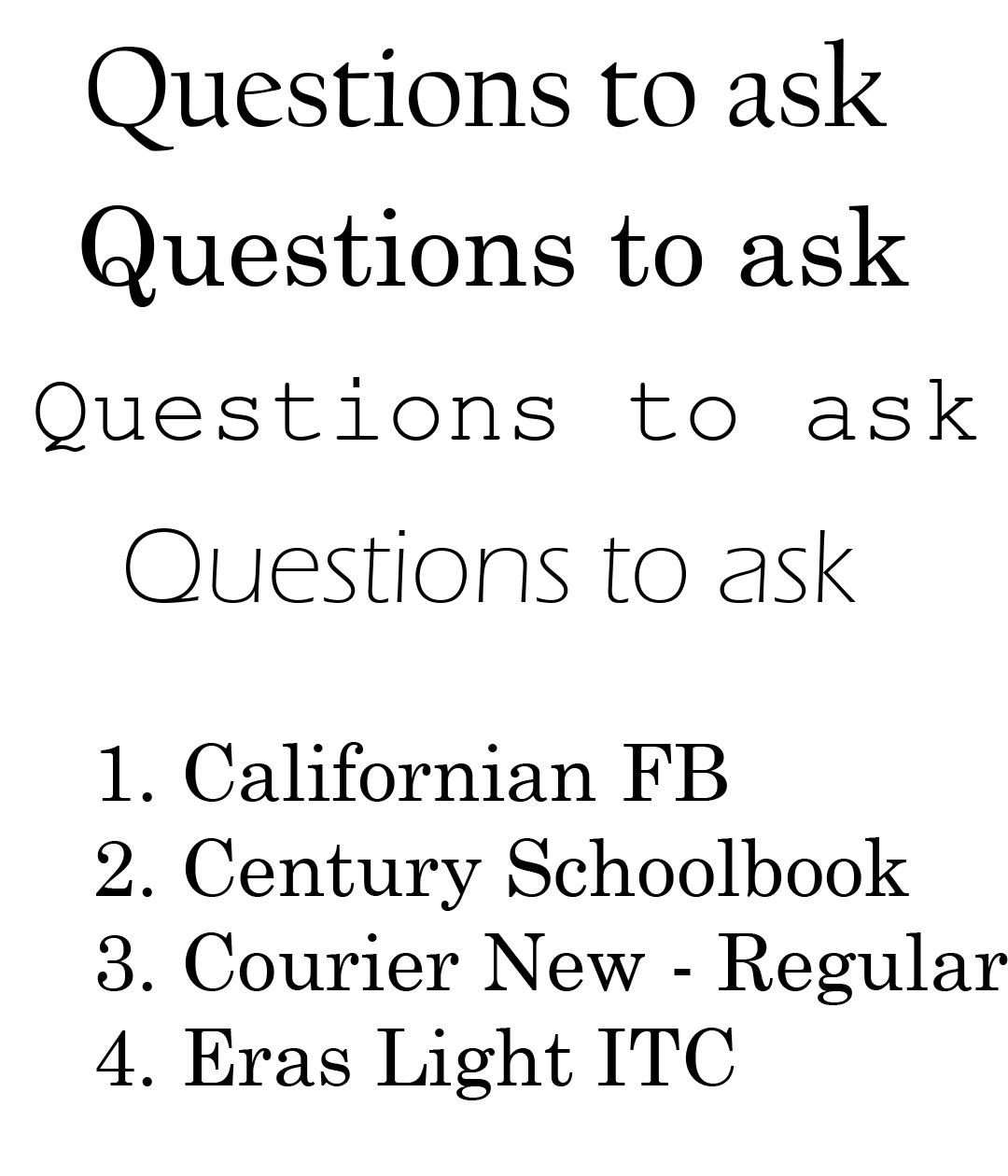
Adaptation Part A - Font Choices

I want the font displayed in my info graphic to be quite plain and easy to read, I think it should be deemed extremely important information to a certain audience so I want to choose a text that reflects a certain clean style.
My personal favorite is the 4th one 'Eras Light ITC', I think its quite stylish and could work well for my project. The other three are other contenders but I think unless someone advises otherwise, the 4th one is a good choice for me. 

Adaptation Part A - Infographic Music Choice


I've invested some real time into choosing the appropriate song for the rhythm of my infographic, after my previous tutorial with Alan I went away and researched a ton of royalty free music that could fit the feel and look I desire. I looked at uplifting piano instrumentals, the reason I thought this could work in my favor was to recognize that the topic of suicides are quite dark and sad. Having this song added to my content would hope to inspire the audience.

Over the weekend I was browsing through television channels when I saw the most recent Lloyd's banking advertisement. It uses a smooth piano instrumental and dialogue to calmly introduce its information. I wanted to also use this as my music choice, Ive had a gander at the composer's facebook page and she's kindly agreed to allow me to showcase her song in my infographic.

Tuesday, 24 January 2017

Adaptation Part A - Art Style for Infographic


-I want to use a simplistic art style that uses darker colour tones in its graphics to express statistics to the viewing audience. I thought of having a visual key linked to suicide, with each transition of text I could introduce them as a hint of an act of suicide.


So for example use this figure as an expression of suicide and then implement a question that the person should be asking themselves. Give a helpful piece of advice and then statistics to support it.

The type of simplistic designs that could be used in the infographic, Icons displaying the information i wish to provide and the transition to text could be the carrying out of a potential suicide but not ever finishing it.

Adaptation Part A - Types of Suicide Statistics

What method of suicide? 
Gun Shot
                                     Drug/Alcohol Overdose                                     
Hanging
Poisoning
               Carbon Monoxide Inhalation                
Suffocation
Jumping
Exsanguianation
Electric Shock
Drowning
6,122 People died by suicide in the UK
4,630 Men (76%)
1,492 Women (24%)

- I could have these statistics form onto a piechart up above, that breaks down and displays the information by transitioning between the two.